
Description
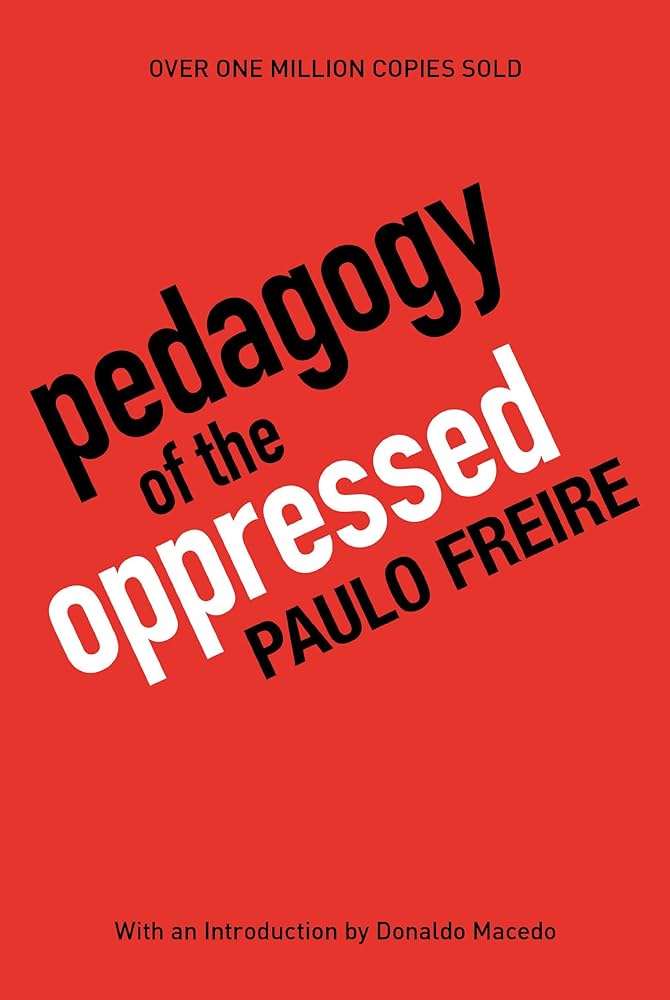
Pedagogy of the Oppressed by Paulo Freire is a revolutionary work in educational theory that critiques traditional forms of education and promotes a more egalitarian, participatory, and critical approach to teaching. Freire argues for an education system that empowers students to question and challenge the status quo rather than passively absorbing information. His ideas on dialogue, liberation, and the teacher-student relationship have had a lasting impact on educational philosophy, making this book essential reading for educators and anyone interested in social justice and reform.

Kate –
A foundational text for critical pedagogy, Paulo Freire’s work challenges traditional teacher-student dynamics, advocating for a collaborative, empowering educational approach. It emphasizes dialogue, critical consciousness, and the liberation of both learners and educators from oppressive structures. A powerful, albeit dense, read that inspires educators to foster social change.
Nasir –
A foundational text in critical pedagogy, this work challenges traditional teacher-student dynamics. It advocates for a liberatory education where students become active participants in their own learning and societal transformation. Though dense, its profound insights into power structures and education remain relevant for educators committed to social justice.
Hassan –
A foundational text for critical pedagogy. Freire’s work examines the power dynamics inherent in traditional education, advocating for a dialogical approach that empowers learners to become active agents of social change. It’s challenging but insightful, offering a framework for educators to foster critical consciousness and liberation.